 SleepBit
Polysomnography vs Home Sleep Apnea Testing
They measure different signals and suit different patients; convenience is not the same as completeness.
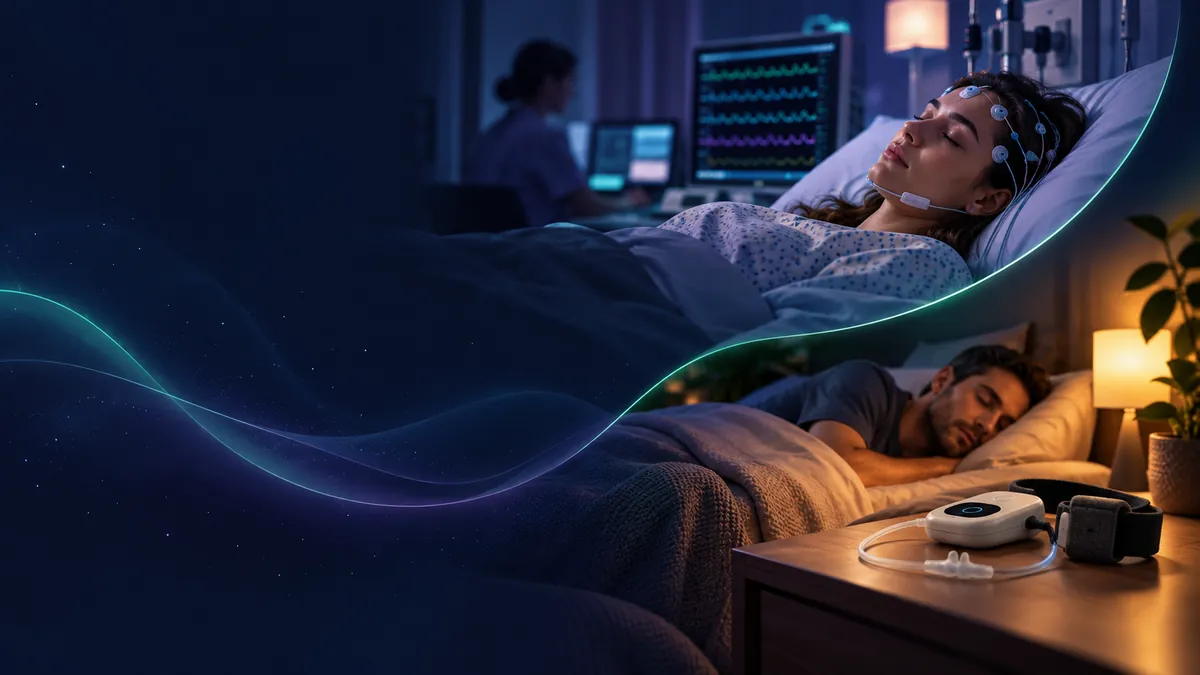
Polysomnography records sleep stages, eye movements, muscle activity, breathing and oxygen in a lab. A home sleep apnea test uses fewer sensors at home and focuses mainly on breathing and oxygen.
What does the evidence say?
AASM supports HSAT for uncomplicated adults at increased risk of moderate-to-severe OSA. In-lab PSG is generally preferred when major cardiopulmonary disease, neuromuscular weakness, chronic opioid use, stroke history or severe insomnia complicates interpretation.
What to do next
Ask which test fits your symptoms and medical history, not simply which test is better. A test may need repeating if sensors detach or recording time is inadequate.
Interpret with care
HSAT can underestimate event frequency because it may use recording time rather than measured sleep time. Audio recording cannot replace either test.
Put the reasoning together
An uncomplicated adult with typical OSA risk may start with HSAT. Major cardiopulmonary disease, chronic opioid use or severe insomnia can make in-lab PSG more informative.
A common misconception
Myth: home testing is inaccurate and lab testing is always superior. The tests answer different questions; good HSAT is useful in the right patient.
How to use this information
While preparing for testing, keep usual routines and record sleep time, position, alcohol, congestion and medicines. The goal is not to manufacture a “good” result but to capture a representative night. When results arrive, review signal quality, what was measured and why the recommended next step follows. Do not postpone care merely to complete a diary when warning signs are already clear.
Next-step checklist
- Check fit for your history, not convenience alone
- Review sensor loss and recording quality
- Know whether sleep stage, breathing and oxygen were measured
Bottom line
HSAT is not simply a smaller PSG. The right first test is the one that answers the clinical question for your situation.
SleepBit records can make a clinical conversation more precise. Diagnosis and treatment changes should be decided with a clinician.