 SleepBit
Your Snore Report Is a Change Map, Not a Diagnosis
Check recording conditions and multi-night direction before the score.
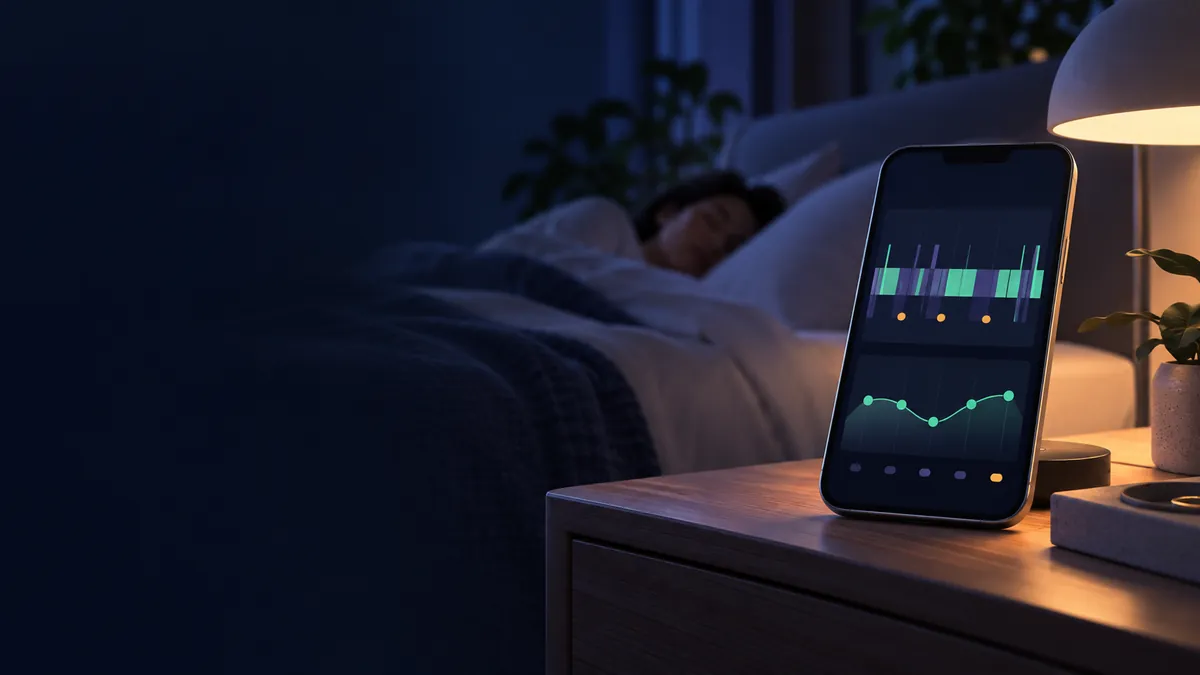
The numbers in a report are not an absolute health score for last night. Consumer sleep technology serves a different purpose from clinical testing, and phone placement, room acoustics, fans and a bed partner can affect results. The most useful reading is a trend across several nights under similar conditions.
1. Total snoring time and ratio
This estimates how much sound was classified as snoring. Start with the direction of a weekly average. A one-night spike may reflect background noise or a different phone position.
2. Intensity bands
A ‘loud’ segment describes sound reaching the microphone. It does not reveal exactly how narrow the airway became or how far oxygen fell. Comparisons are stronger when the same phone and distance are used.
3. Timeline and playback
Play back selected segments to check whether they are snoring, speech, coughing or a fan. Do not label a quiet gap as apnea from sound alone; consider the surrounding breaths and daytime symptoms.
4. Habit notes
Mark alcohol, congestion, position and bedtime. Changing one factor at a time makes repeatable patterns easier to see.
Keep the comparison consistent
- The same phone and reliable charging
- Similar distance from the head with the microphone uncovered
- A similar room and background-noise level
- Several nights, not one
Smartphone sound tracking can be useful for observing snoring trends. It does not replace oxygen measurement or a sleep-apnea diagnosis.