 SleepBit
How to Prepare Snoring Records for a Clinician
A one-page summary and representative clips are more useful than an entire night of audio.
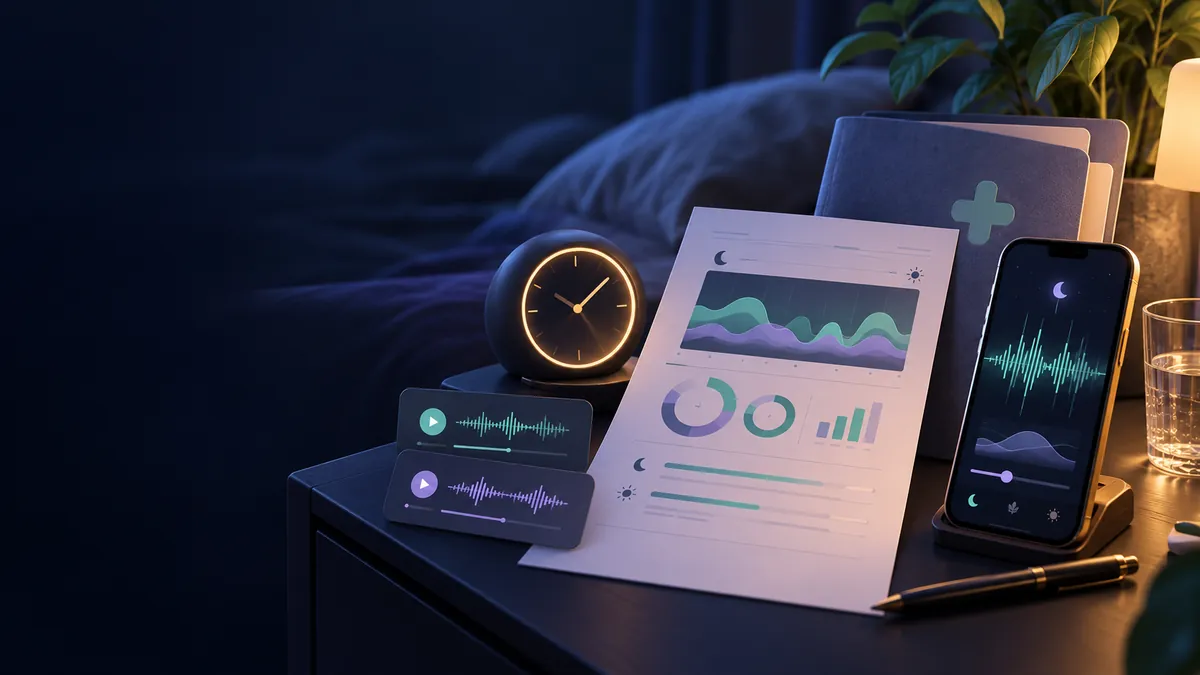
Useful records show when snoring changed, under what conditions and with which symptoms—not only a score. Bedroom audio can contain private information, so keep only necessary excerpts and store them securely.
What the evidence says
Consumer sleep technology can make the patient-clinician conversation more specific, but it does not diagnose a sleep disorder or select treatment. Witnessed pauses, gasping and daytime sleepiness provide the clinical context for any recording.
What to do
On one page, list date, sleep time, alcohol, medicines, congestion, position, sleepiness and witnessed apnea. Label two or three representative clips with time and context, plus the device and recording position.
Use caution
Do not wait for a perfect log if there are breathing pauses or drowsy driving. Never share a partner’s conversation without consent.
Put the reasoning together
A useful log is not the largest one; it answers questions. Capture comparable context such as alcohol, supine sleep, witnessed apnea and daytime sleepiness.
A common misconception
Myth: every automatically tagged clip should be submitted. A few representative clips with context are more efficient clinically.
How to use this information
Recording quality comes from comparability, not volume. Keep phone placement, power state, app version and room setup as stable as practical, and tag changes. Compare a multi-night tendency rather than the highest or lowest night, and keep sound metrics separate from sleepiness and perceived sleep quality. The record should generate better clinical questions, not a diagnosis.
Next-step checklist
- Prepare one page and two or three clips
- Record app, phone, placement and environment
- Protect privacy and partner consent
Bottom line
The record should improve the clinical history, not replace diagnosis. Explain conditions and symptoms, not just scores.
SleepBit records can make a clinical conversation more precise. Diagnosis and treatment changes should be decided with a clinician.