 SleepBit
Is CPAP for Snoring or for Sleep Apnea?
It often quiets snoring, but its main purpose is to prevent airway collapse during sleep.
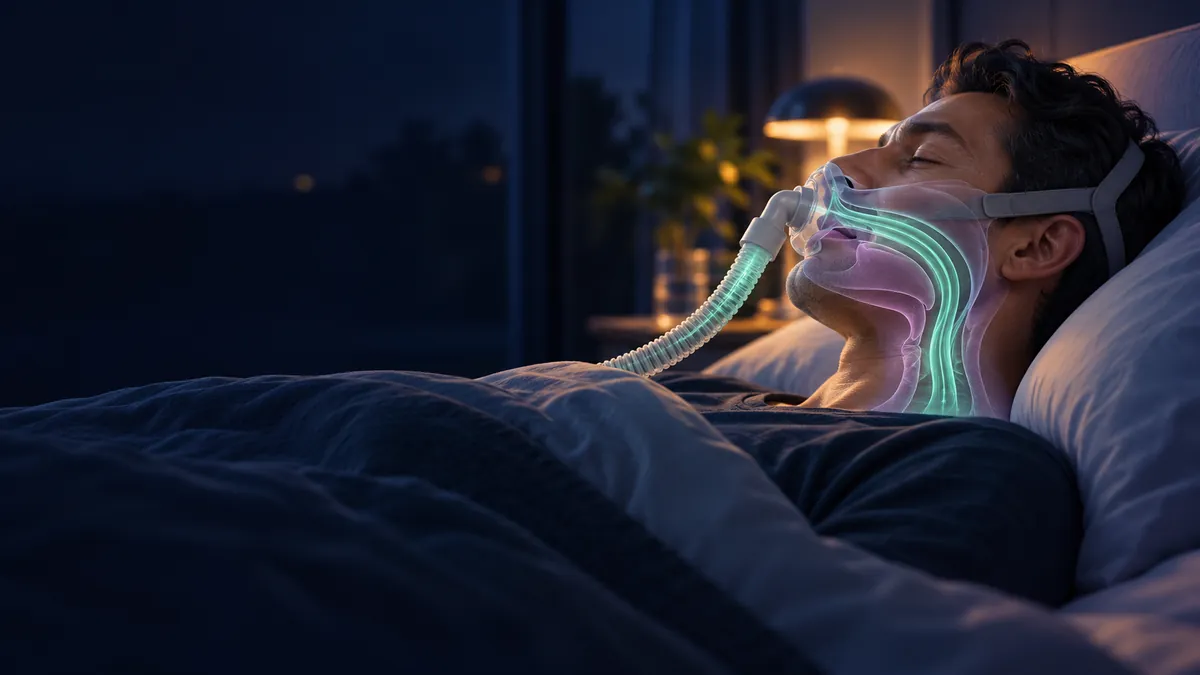
CPAP delivers positive pressure through a mask to keep the upper airway from collapsing. Snoring often improves when the airway is stabilized, but quiet sound alone does not prove that treatment is adequate.
What does the evidence say?
CPAP is a core treatment for OSA because it reduces obstructive events and oxygen drops. It can be offered for primary snoring, although burden and cost mean positional measures or oral appliances are often considered as well.
What to check in practice
Use the prescribed settings and discuss leaks, congestion or dryness rather than abandoning treatment. Review device data, daytime symptoms and follow-up testing when needed.
A point of caution
Do not stop or change pressure simply because a partner reports quieter sleep. If snoring is the only concern, confirm the diagnosis before purchasing CPAP on your own.
Put the reasoning together
A quiet room does not guarantee effective CPAP if leaks are high or use is brief. Some residual sound may matter less when device data and symptoms are controlled.
A common misconception
Myth: discomfort during the first nights proves CPAP is unsuitable. Mask, pressure, humidification and congestion often need adjustment.
How to use this information
Define success before treatment: quieter sound, better daytime function, fewer witnessed pauses, objective control, or a combination. Do not conclude from the first uncomfortable nights or one unusually good score. Allow an adaptation period and compare several nights. If adverse effects appear, look for adjustable causes before abandoning therapy, and do not stop prescribed treatment without reassessment.
Next-step checklist
- Review nightly use and leak
- Adjust mask or humidification instead of quitting
- Know the treatment target and follow-up date
Bottom line
CPAP aims to control airway obstruction and its consequences, not merely silence snoring. Sound is supporting evidence, not the endpoint.
SleepBit records can make a clinical conversation more precise. Diagnosis and treatment changes should be decided with a clinician.